| Flue gas desulphurization | ||
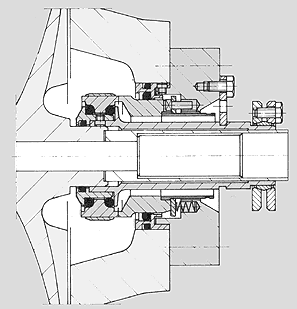
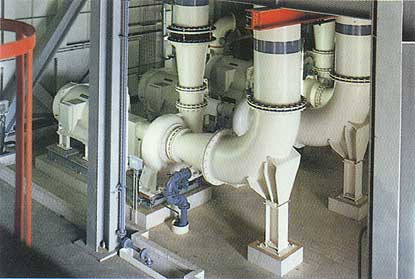
Processes: At present there are between 15 and 20 fully developed industrial flue gas desulphurization processes in active service. Almost all flue gas desulphurization systems operate by the wet, mixed or dry process, reducing the SO2 concentration in the flue gas to approximately 250 mg per Nm3 The currently valid (1988) German Large-Scale Furnace Regulation (GFAVO) limits SO2 emission values to a maximum 400 mg per Nm3. Media: The media to be sealed in the wet and mixed processes are mostly abrasive and corrosive SO2 absorption suspensions (cf. suspensions) such as suspensions of milk of lime, gypsum, limestone etc. with pH = 3 – 10, chloride contents up to 50,000 ppm and solid contents up to 50 % (grain sizes 1 – 200 mm). pH < 2 and a chloride content > 70,000 ppm can arise temporarily in cases of malfunction. Units: Mechanical seals are used in flue gas desulphurization systems in the centrifugal pumps (all-metal design or with rubber or plastic lining), eccentric screw pumps and agitators. Seals: Mechanical seals are used as sealing elements mainly in the units for wet or mixed desulphurization. Single, product-lubricated mechanical seal without buffer and flushing fluid: This type of mechanical seal is the optimum for the suspensions occurring in flue gas desulphurization systems. An elaborate buffer fluid supply or external flushing is unnecessary. Characteristic feature of this mechanical seal is its direct location on the impeller hub in as big a pump side chamber as possible. Lubrication of the sliding faces and the transfer of heat are performed by the pumping fluid. The mechanical seal has a rotating counter ring and a stationary. spring backed seal face. The spring chambers are protected on the inside and outside against deposits of the product and leakage (also refer to spring protection sleeve).
Standard materials:
|
Refuse combustion plants: Mechanical seals employed in the flue gas desulphurization systems of refuse combustion plants correspond to those in power station flue gas desulphurization systems. Metal sealing parts made of e.g. Hastelloy C or rubber coatings are necessary, however, due to the aggressive media (chloride contents up to 200,000 ppm and pH-values up to <1).
|
|
Various flue gas desulphurization processes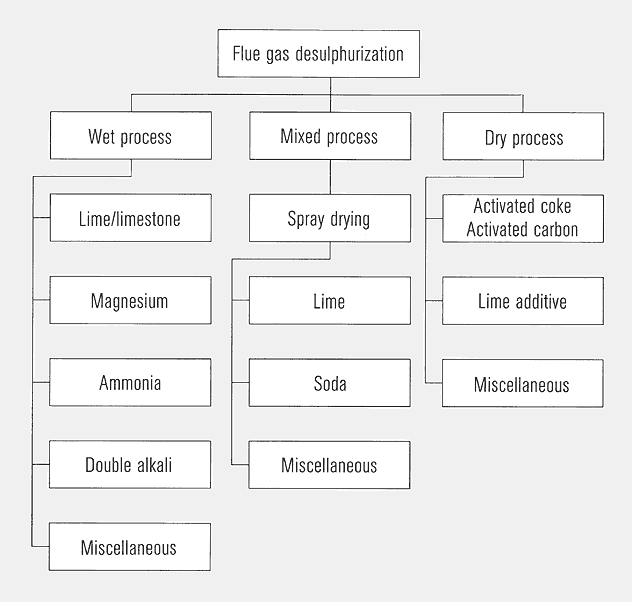
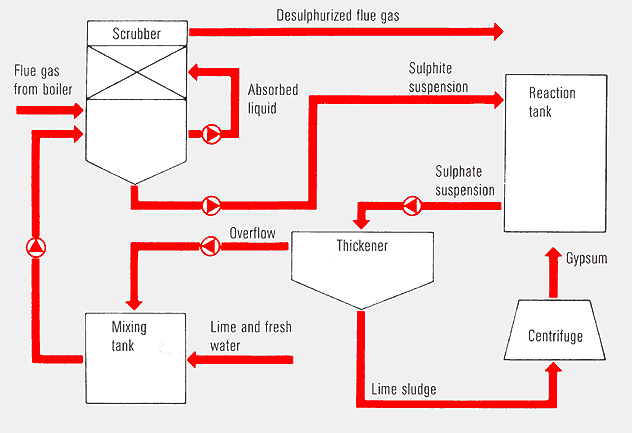
Flow chart of a flue gas desulphurization system operating by the wet scrubbing
process (lime/limestone)
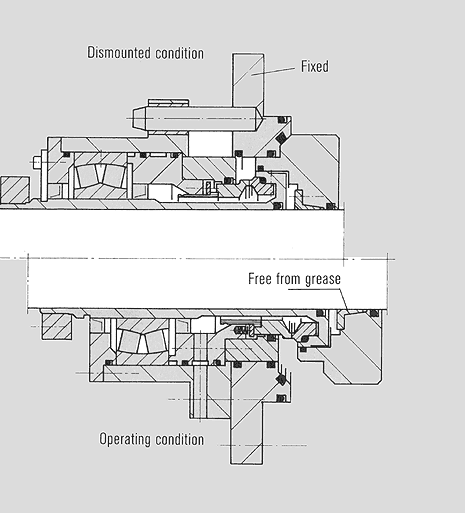
Single-acting agitator seal with shut-down seal, e. g. for washers and absorbers |
||